
Credit cards and personal loans are two different forms of borrowing.
A credit card gives you a revolving credit facility up to an approved limit.
A personal loan generally provides a lump sum that you repay through scheduled instalments over a defined tenure.
Neither is automatically better.
The right choice depends on:
- How much money you need
- How quickly you can repay it
- The cost of borrowing
- Whether you need one-time or recurring access to credit
- Your financial situation
What Is a Credit Card?
A credit card provides a predefined credit limit.
For example, suppose your credit-card limit is ₹1,00,000.
You may spend up to the available limit, subject to the card’s terms.
After the billing cycle, you’ll receive a statement showing your transactions and amount payable.
Credit cards can be useful for:
- Everyday purchases
- Online shopping
- Short-term expenses
- Emergency purchases
- Rewards and offers
However, carrying a revolving balance can become expensive because credit-card interest rates can be high.
What Is a Personal Loan?
A personal loan generally provides a fixed amount upfront.
For example:
Loan amount: ₹3,00,000
Tenure: 3 years
You receive the approved loan amount and repay it through scheduled EMIs.
Personal loans can therefore be more suitable for planned larger expenses where you know exactly how much money you need.
Credit Card vs Personal Loan: Key Differences
| Feature | Credit Card | Personal Loan |
|---|---|---|
| Type | Revolving credit | Instalment loan |
| Access to money | As needed within limit | Lump sum |
| Repayment | Flexible, subject to statement terms | Fixed/scheduled EMI |
| Interest | Can be high on revolving balances | Depends on lender/profile |
| Suitable for | Short-term purchases | Larger planned expenses |
| Credit limit | Reusable | Fixed loan amount |
| Tenure | No fixed loan tenure | Defined tenure |
| Rewards | May offer rewards | Usually no rewards |
| Fees | Annual/other fees may apply | Processing/other fees may apply |
When Is a Credit Card Better?
A credit card may make sense when you need a relatively small amount and expect to repay it quickly.
For example, imagine you need ₹10,000 for an expense and can comfortably pay the full statement amount by the due date.
Using a credit card could be convenient.
Credit cards may also provide rewards, cashback or other benefits depending on the product.
But always understand the card’s terms.
When Is a Personal Loan Better?
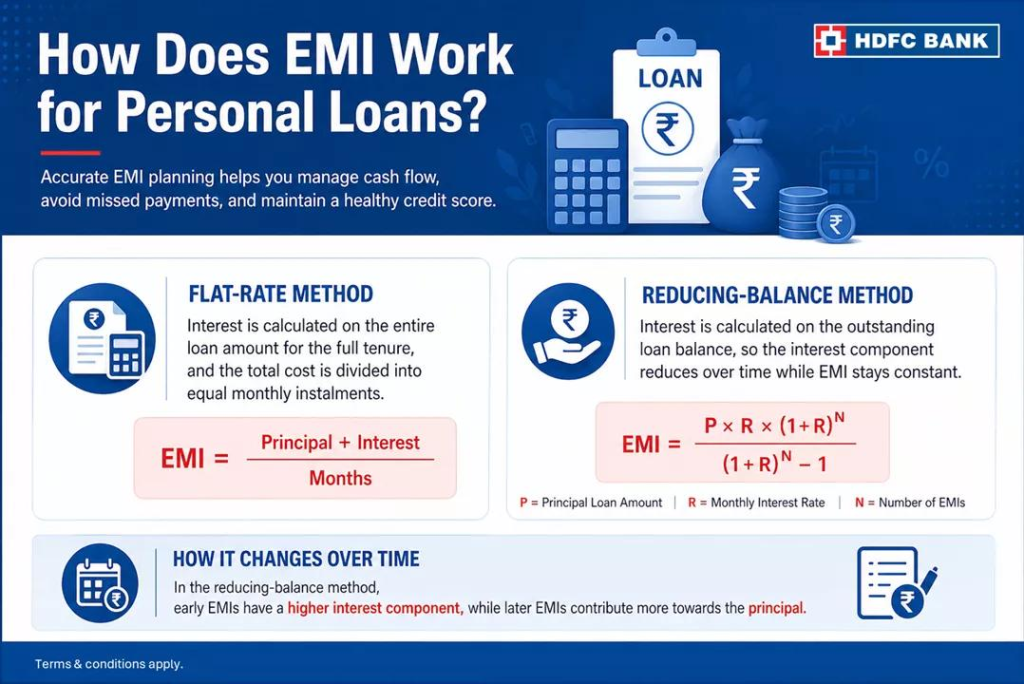
A personal loan may be more appropriate when you need a larger lump sum and want structured repayment.
For example, you may need ₹5 lakh for a major planned expense.
Instead of managing a revolving credit-card balance, a personal loan can provide a defined amount with a defined repayment schedule.
This makes budgeting easier for some borrowers.
Which Has a Lower Interest Cost?
There is no universal answer.
Personal loans often have lower interest rates than revolving credit-card balances, but the actual cost depends on the specific products and your lender.
You should compare the total cost of borrowing, not simply the advertised rate.
Consider:
Total cost = Interest + applicable fees + other charges
For credit cards, understand what happens if you don’t pay the full amount.
For personal loans, examine processing fees, foreclosure/prepayment conditions and other applicable charges.
Which Is Better for a Large Expense?
For a large planned expense, a personal loan may be more suitable because it gives you a fixed amount and structured repayment schedule.
A credit card may be more convenient for smaller purchases.
However, don’t assume that a personal loan is always cheaper.
Compare the actual offers before choosing.
Which Is Better for Emergencies?
The answer depends on your available cash and repayment ability.
For a small emergency expense that you can repay quickly, a credit card may provide convenience.
For a larger emergency, a personal loan may provide a structured repayment option if you qualify.
But the best financial protection is an emergency fund that reduces the need for expensive borrowing.
Impact on Your Credit Score
Both credit cards and loans can become part of your credit history.
Responsible repayment can contribute to a healthy credit profile.
Late payments and excessive borrowing can hurt it.
CIBIL identifies payment history, credit utilisation, credit age and enquiries among important factors affecting the score.
Therefore, the product itself isn’t automatically “good” or “bad” for your credit score.
Your behaviour matters.
Example: Credit Card vs Personal Loan
Suppose you need ₹1,00,000.
Option A: Credit Card
You spend ₹1,00,000 on your credit card.
If you can repay the full applicable amount by the due date, the cost may be substantially different from carrying the balance over multiple months.
If you only make minimum payments and revolve the balance, interest and charges can make the debt expensive.
Option B: Personal Loan
You borrow ₹1,00,000 through a personal loan.
You receive a fixed repayment schedule.
The total cost depends on the interest rate, tenure and applicable fees.
This may make the loan easier to budget for a larger planned expense.
Which One Should You Choose?
Choose a credit card when:
- You need short-term spending flexibility.
- You can repay responsibly.
- You understand the card’s fees and interest.
- You want card-specific rewards or benefits.
Consider a personal loan when:
- You need a larger lump sum.
- You want fixed repayments.
- You need a defined repayment period.
- The loan’s total cost is suitable for your budget.
Final Verdict
There is no universal winner.
A credit card can be useful for short-term, controlled spending.
A personal loan can be useful for larger expenses requiring structured repayment.
The most important question isn’t:
“Which product is better?”
It is:
“Which option costs less and fits my repayment capacity for this particular need?”
Frequently Asked Questions
Is a personal loan cheaper than a credit card?
It can be, particularly compared with carrying a credit-card balance, but you must compare the actual interest rate and fees.
Can a credit card replace a personal loan?
For small expenses, sometimes. For larger expenses, a personal loan may provide a more structured repayment arrangement.
Does a personal loan improve CIBIL?
Responsible repayment contributes to your credit history, but there is no guaranteed score increase.
Should I take a personal loan to pay my credit-card bill?
It depends on the interest rates, fees, repayment period and your ability to repay. Compare the total cost carefully before making such a decision.